
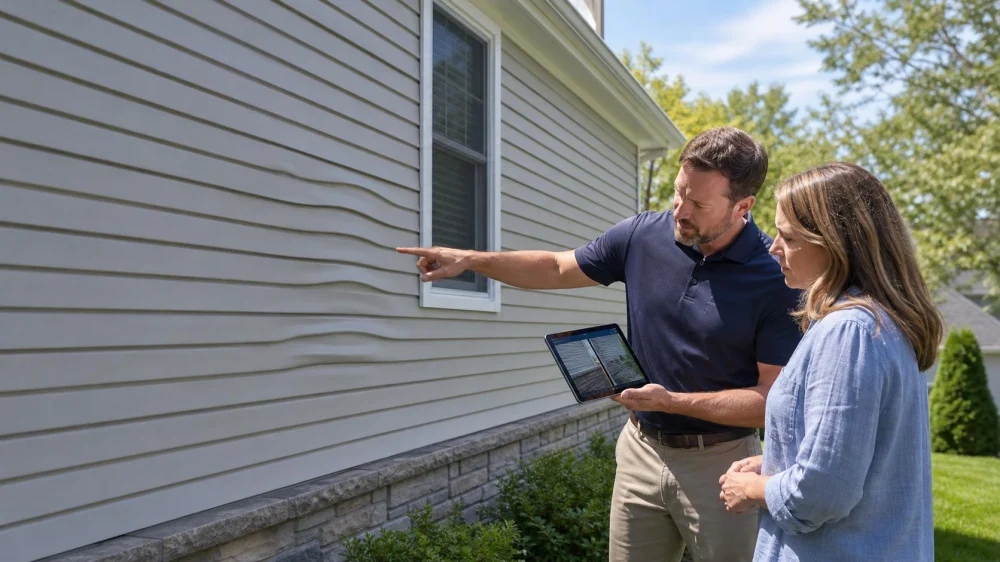
Siding Buckling and Ripples: Heat, Fasteners, and Gaps
On this page
Quick answer
Wavy or buckled siding can result from heat, restricted movement, tight clearances, improper fasteners, uneven walls, moisture, or impact. Photograph the pattern at different temperatures and inspect from the ground. Do not nail through the face, force panels flat, or seal movement gaps. A qualified contractor should identify the system and underlying cause before replacing pieces.

Ray & Sons Roof Repair
TorranceLos Angeles CountyCalifornia
3445 Pacific Coast Hwy #74, Torrance, CA 90505, USA
What buckling looks like
Buckling may appear as waves across several vinyl courses, bowed panels, raised edges, ripples around windows, or individual pieces pushed outward. Fibre cement, wood, engineered wood, and metal can show different distortion patterns.
Some minor shadow variation is normal, especially on long walls in angled light. A new or changing pattern, open seam, cracked panel, or movement in wind deserves inspection.

Heat and reflected sunlight
Dark siding absorbs heat, and vinyl expands as temperature rises. Proper installation allows that movement. Concentrated sunlight reflected from energy-efficient windows can create localized high surface temperatures and distort some products.
Record whether ripples appear only during the hottest part of the day, near a neighbouring window, grill, generator exhaust, or other heat source. Do not diagnose reflection solely from one photograph.
Fasteners and movement
Vinyl siding is usually hung rather than clamped tightly. Fasteners centered in slots and appropriate clearance at trim allow expansion and contraction. Nails driven too tightly, misplaced fasteners, or panels cut without enough end clearance can restrict movement and create waves.
Other systems require different fastener schedules and joint details. Exposed nails, improvised screws, or excessive caulk can violate instructions and warranties.
Wall and moisture causes
An uneven substrate, swollen sheathing, displaced insulation, framing movement, or improper furring can telegraph through siding. Water intrusion may swell wood-based materials or corrode attachments. Insect damage or impact can also deform the support.
Check inside for stains, drafts, soft trim, musty odor, or changes after rain. Do not open the wall until moisture, electrical, and hazardous-material risks are considered.
Observe without touching
- Photograph the full wall in morning, midday, and evening light.
- Mark the affected area on a simple elevation sketch.
- Note temperature, sunlight, wind, and recent storms.
- Look for nearby windows, vents, heat sources, and drainage.
- Use binoculars for upper walls.
- Record installation date, product, colour, and previous repairs.
Do not push panels or climb a ladder to see whether they move.
Repairs to avoid
- Do not face-nail a bulge flat.
- Do not fill expansion or drainage gaps with caulk.
- Do not heat, cut, or bend panels yourself.
- Do not cover a moisture-damaged wall with new siding.
- Do not pressure wash a distorted area.
A cosmetic shortcut can lock movement, hide water, and complicate a warranty claim.
Professional inspection checklist
A qualified contractor should identify the siding brand and profile when possible, then compare the wall with current or original instructions. Inspection can include fastening, slot position, trim clearances, panel engagement, substrate flatness, weather barrier, flashing, drainage, and heat exposure.
For suspected window reflection, document the sun angle and affected pattern. Any mitigation must be compatible with windows, siding, neighbours, and local rules.
Plan the repair scope
- State the diagnosed cause and supporting evidence.
- List panels and trim to remove.
- Describe substrate or moisture investigation.
- Confirm matching product, colour, profile, and lot expectations.
- Define flashing and weather-barrier repairs.
- Use written approval for hidden damage.
- Document final alignment and movement clearances.
Important limitations
This article is general homeowner information, not an installation specification, engineering assessment, or warranty decision. Siding materials, wall assemblies, heat exposure, codes, and manufacturer requirements vary. Only an on-site qualified professional can determine the cause.
Sources and evidence notes
- Vinyl Siding Institute: installation guidance on fastening and expansion movement.
- Siding manufacturers: product-specific clearances, fasteners, heat limits, and warranty terms.
- Building Science Corporation and related research: drainage-plane and wall-moisture principles.
- Local building authorities: applicable repair, permit, and exterior-cladding requirements.
Frequently asked questions
Does buckled siding always mean it was nailed too tight?
No. Heat, clearances, substrate, moisture, impact, and product defects can produce similar patterns.
Why do ripples appear only in afternoon sun?
Thermal expansion or concentrated reflection may be involved. Document the timing and have installation clearances assessed.
Can one panel be replaced?
Sometimes, but a repair should correct the cause and account for colour fade, profile availability, and concealed damage.
Should I make the contractor caulk every gap?
No. Some gaps enable movement or drainage. Caulk only where the system instructions call for it.
Conclusion
Siding waves are a symptom with several possible causes. Record when and where they occur, avoid forcing the surface flat, and have the full wall system inspected. A sound repair preserves required movement, corrects moisture or substrate problems, and matches the manufacturer's fastening and clearance details.
 Anthony John Construction4.0 (380 reviews)
 Windsor Metal Roofing LLC5.0 (23 reviews)
 Pro One Remodeling Services4.0 (37 reviews)
 Roofer Chicks4.0 (456 reviews)
 Garon-teed Roofing5.0 (48 reviews)
 True North remodeling LLc5.0 (3 reviews)
 Should I Repair or Replace My Roof? A Complete Guide
 How to Maintain Roof Durability Over Time | Total Roofing Hub
 The Complete Guide to Metal Roofing Systems | Total Roofing Hub
 How to Choose a Reliable Roofing Contractor Near You: A Step-by-Step Guide
 Siding vs Stucco: Which Is Better for Your Home?
 How to Choose a Reliable Roofing Contractor Near You