
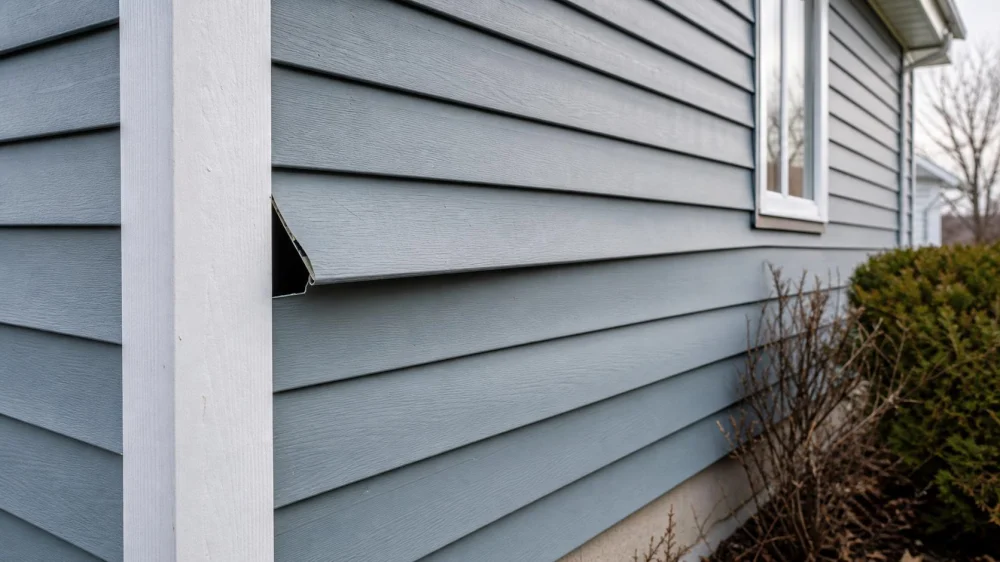
Loose Siding After Wind: Safe Checks and Repair Questions
On this page
- Quick answer
- What loose siding looks and sounds like
- Safe ground-level storm check
- Why siding comes loose in wind
- Protect people and the building
- Repairs to avoid without the right system details
- What to ask the siding contractor
- Urgent signs, limitations, and evidence notes
- Frequently asked questions
- Conclusion and next steps
Quick answer
After strong wind, stay clear of loose panels and inspect only from safe ground. Photograph lifted edges, missing pieces, rattling areas, exposed wall layers, and nearby trim. Do not push, nail, tape, or caulk siding back into place without identifying the product and fastening system. A qualified contractor should inspect locks, fasteners, clearances, substrate, weather barrier, flashing, and matching-material options before repair.

What loose siding looks and sounds like
Wind damage varies by siding type. Vinyl panels interlock and hang from fasteners; fibre-cement and engineered-wood boards use specified fasteners and joint details; metal panels may use clips, screws, seams, or concealed systems; wood siding can split, pull from nails, or lose coatings.
From inside or the ground, notice:
- A lower edge that drops out of its lock
- A corner or board lifting away from the wall
- Panels bowing, fluttering, rattling, or tapping in wind
- Missing siding, trim, starter strip, corner post, or fastener
- Cracks, punctures, tears, creases, or broken locking hems
- Exposed housewrap, sheathing, insulation, or fasteners
- Open joints around windows, doors, vents, lights, and utility penetrations
- New interior drafts, water staining, or noise at the same wall
A panel can look flat in calm weather and move only during gusts. Record sound and movement from a safe indoor or sheltered location.
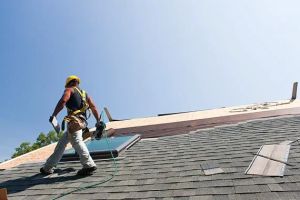
The Roofing Experts Lennox
LennoxLos Angeles CountyCalifornia
10827 Hawthorne Blvd #100, Lennox, CA 90304, USA
Safe ground-level storm check
- Wait for conditions to improve. Avoid lightning, active high wind, falling branches, ice, floodwater, and unstable trees.
- Create an exclusion area. Keep people, pets, and vehicles away from loose overhead siding and trim.
- Walk at a distance. View each elevation without standing directly below lifted panels.
- Use zoom. Photograph wide wall context and close details with binoculars or camera zoom rather than a ladder.
- Check vulnerable locations. Look at corners, roof-to-wall areas, gable peaks, eaves, garage doors, utility penetrations, and wall ends.
- Look downwind. Missing pieces may be on the ground or neighbouring property. Do not enter restricted or unsafe areas to retrieve them.
- Check inside. Note drafts, daylight, damp odour, stains, and water near electrical devices.
- Save storm information. Record date, time, wind direction if known, photos, videos, and when damage was first noticed.
Why siding comes loose in wind
- Broken or incomplete interlock: A vinyl panel may not have been fully engaged or its hem may be damaged.
- Fastener issues: Wrong type, spacing, placement, embedment, corrosion, overdriving, underdriving, or missed framing can reduce holding.
- Insufficient movement space: Some siding must move with temperature. Fastening too tightly or missing clearances can create distortion and stress.
- Damaged starter or trim: A failed starter strip, J-channel, corner post, or termination can release nearby panels.
- Weak substrate: Wet, decayed, thin, damaged, or poorly supported sheathing or framing may not retain fasteners.
- Wind pressure and suction: Corners, wall edges, gables, and open building conditions can experience high local forces.
- Impact: Branches, debris, hail, ladders, or equipment can crack material and weaken attachment before or during wind.
- Previous repair or alteration: Reinstalled panels, new penetrations, added fixtures, or partial replacement may change attachment and drainage.
The direction a panel lifted does not prove why it failed. Product, installation, exposure, and wall condition must be considered together.
Protect people and the building
Keep doors and windows closed on the affected elevation when possible and move indoor belongings away from active water. Do not stand under a loose panel to hold it during wind.
If wall layers are exposed, a contractor may install temporary weather protection compatible with the assembly. Temporary work must resist wind, shed water, avoid trapping moisture, and not create new penetrations or electrical hazards.
Do not cover combustion vents, dryer outlets, intake or exhaust openings, weep paths, service equipment, electrical components, or required address markings. Keep emergency exits usable.
Contact the insurer, landlord, condominium association, or property manager promptly when required. Photograph before temporary stabilization, but do not delay action needed to protect people and prevent further damage.
Repairs to avoid without the right system details
- Do not drive face nails or screws through visible siding unless the approved repair requires it.
- Do not overdrive fasteners into vinyl and prevent designed movement.
- Do not glue, tape, or caulk a lower edge that is supposed to lock or drain.
- Do not mix incompatible metals, sealants, flashings, coatings, or fasteners.
- Do not climb a ladder in wind or work from a roof edge.
- Do not reinstall a cracked panel over wet sheathing or torn weather barrier.
- Do not assume a visually similar replacement has the same profile, thickness, colour, exposure, fastening, or warranty.
Improvised repairs may hide the damage temporarily while leaving wind resistance and water management worse.
What to ask the siding contractor
- What exact siding product and attachment system is present?
- Did the panel, fastener, lock, trim, starter, substrate, or surrounding wall fail?
- How far does the damage extend beyond the visible loose piece?
- Is the weather-resistive barrier, flashing, sheathing, or framing damaged or wet?
- Which manufacturer detail and local requirement govern the repair?
- Can the panel be relocked, or is the locking hem, board, or fastener zone damaged?
- How will colour, profile, texture, weathering, and thickness be matched?
- Will removal expose adjacent panels that are brittle or likely to break?
- How will concealed damage, permits, cleanup, warranty, and insurer documentation be handled?
- How will the finished repair be checked for secure attachment and correct drainage?
Request dated before-and-after photographs and a written scope. A repair should restore fastening, movement, drainage, flashing, and appearance—not only make the panel look flat.
Urgent signs, limitations, and evidence notes
Use urgent help for a panel or trim piece at risk of falling, damaged electrical service, broken glass, gas odour, active interior water near electricity, structural movement, or a wall opening exposed during continuing severe weather. Keep the area isolated and follow emergency guidance.
This article reflects common siding inspection practice in the United States. Ground photos cannot verify fastener layout, substrate strength, weather-barrier condition, product compliance, or wind pressure. Manufacturer details and physical inspection are stronger evidence.
Building codes, permits, product approvals, contractor rules, insurance, and warranty procedures vary by state, municipality, wall assembly, and project scope. Preserve damaged pieces and records when safe and follow required notice procedures.
Frequently asked questions
Can loose vinyl siding be snapped back into place?
Sometimes an intact panel can be relocked, but the lock, fasteners, trim, and substrate must be checked. If a hem is broken or attachment is wrong, snapping it back is not a durable repair.
Why does siding rattle only on windy nights?
A loose lock, oversized fastener slot movement, missing attachment, trim contact, or another exterior component may move only at certain wind speeds and directions. Record the location and sound safely.
Should I tape a loose panel before the contractor arrives?
Tape may not hold in weather, can damage finishes, and requires approaching the hazard. Keep the area clear and ask the contractor about safe temporary stabilization.
Does one loose panel mean all siding was installed wrong?
No. It may be local impact, a damaged lock, edge exposure, or one fastening issue. A repeated pattern across corners or elevations suggests broader investigation.
Can replacement siding match the old colour?
Even the same named colour may differ because of weathering and manufacturing changes. Contractors should compare physical samples and discuss whether a larger blended area is needed.
Conclusion and next steps
Wait for safe weather, keep people away, photograph loose siding from the ground, and check the same wall inside. Do not nail, tape, caulk, or climb to flatten it. Ask a qualified contractor to identify the product and failure, inspect the weather barrier and substrate, and document how the repair restores attachment, movement, drainage, and matching.
 Best Roofing & Siding4.0 (23 reviews)
 Ariel Builders Roofing Services5.0 (138 reviews)
 Chambers Inc. dba Roof Construction3.0 (6 reviews)
 Solid Rock Roofing5.0 (11 reviews)
 King's Premium Roofing4.0 (128 reviews)
 NJN Roofing and Construction LLC5.0 (19 reviews)
 How Roof and Siding Work Together to Protect Your Home Envelope
 How Long Does Vinyl Siding Last? Life Expectancy & Maintenance Tips
 How to Evaluate Existing Roof Structure Before Major Upgrades
 How to Spot Roofing Damage Before It Spreads
 What’s the Best Time of Year to Replace Your Roof? Expert Seasonal Guide
 How Solar Panel Weight Impacts Roof Structure & Installation