

Roof Warranty Transfer: Verify the Rules Before Home Closing
On this page
Quick answer
A roof warranty does not automatically follow a home sale just because the roof is newer. Identify the manufacturer’s material warranty, any enhanced system warranty, and the contractor’s workmanship promise as separate documents. Then confirm eligibility, deadline, fee, required form, inspection, ownership limit, and who must submit the transfer. Complete the process before the stated deadline and keep written acceptance.
This checklist is for U.S. buyers and sellers organizing roof records. It does not interpret a contract or guarantee that a claim will be covered.

Identify each promise
Start with the signed roofing proposal, final invoice, warranty certificates, product labels, permit, inspection record, and proof of payment. Note the installer’s legal name, installation date, roof system, product line, color, lot or batch information if available, and any registration number.
Separate three categories. A material warranty generally addresses defined product defects. A workmanship promise addresses installation within the contractor’s stated scope. An enhanced or system warranty may depend on approved products, installer status, registration, inspection, or other conditions. Marketing phrases such as “lifetime” are not the operative terms; the written definition, exclusions, proration, and remedy are.

Verify transfer terms
- Use contact details on the official warranty document or manufacturer website, not an unverified search ad.
- Provide the property address, original owner, installation date, certificate number, and closing date.
- Ask whether transfer is allowed and how many ownership transfers are permitted.
- Confirm who files, the filing deadline, fee, required proof of sale, and whether an inspection or maintenance record is required.
- Ask whether coverage length, remedy, or proration changes after transfer.
- Request written confirmation when the new owner is registered.
Repeat the process with the roofing contractor. A manufacturer transfer does not transfer an installer’s separate promise, and a contractor may have closed, changed ownership, or used terms that differ from the manufacturer’s.
Build the closing file
Create one digital and one durable offline folder. Include the complete contract, change orders, invoices, canceled-payment evidence, product warranty, workmanship terms, registration, transfer submission, acceptance, permit closure, inspection, photos, maintenance history, repair records, solar or satellite attachments, insurance claim documents, and contact information.
The seller should disclose known leaks, repairs, and modifications according to applicable requirements rather than presenting a warranty as proof that no issue exists. The buyer should receive originals or readable copies before closing and confirm that names and property details match. A screenshot of a registration page is helpful, but a confirmation number or written acknowledgment is stronger.
Inspect before relying on coverage
A warranty is not a condition report. A qualified home inspector or roofing contractor can look for active leakage, damaged or missing materials, flashing defects, ventilation concerns, drainage problems, previous repairs, and unauthorized penetrations. Ask the inspector to distinguish observed conditions from warranty eligibility.
If a concern appears before closing, notify the appropriate party in writing and follow the claim procedure. Do not assume a transfer will cure pre-existing damage, maintenance exclusions, storm damage, movement, improper alterations, or consequential interior costs. Obtain the actual coverage decision rather than relying on an agent’s summary.
Transfer checklist
- Manufacturer, system, and workmanship documents separated
- Installer and product details matched to the property
- Transfer eligibility and ownership limit confirmed
- Deadline, fee, form, proof, and inspection requirements recorded
- Coverage changes after transfer reviewed
- Known repairs and modifications documented
- Independent roof condition assessed
- Written transfer acceptance stored after closing
Limitations
Warranty language, state law, disclosure duties, and real-estate contracts vary. This article cannot determine legal rights, coverage, or claim value. Use the signed documents and written responses from the responsible manufacturer and contractor; consult a qualified attorney or real-estate professional for legal interpretation.
FAQ
Does a “lifetime” warranty transfer?
Not necessarily. The document defines whose lifetime, transfer rights, term changes, and remedies.
Who pays the transfer fee?
The parties can allocate it in the sale, but the warranty specifies the required payer and process. Put the agreement in writing.
Is the invoice enough?
It proves useful facts but may not replace registration, a certificate, inspection, or transfer acceptance.
What if the contractor is out of business?
The workmanship promise may be affected. Contact the manufacturer separately and review any enhanced coverage and installer requirements.
Can the buyer file after closing?
Only if the written terms allow it and the deadline is met. Do not wait based on an assumption.
Evidence notes
The primary evidence is the exact warranty issued for the installed products, the contractor’s signed workmanship terms, registration records, transfer rules, and written acceptance. Project invoices, permits, inspection records, and dated photos support identity and history but do not expand coverage. Because warranty programs change, verify current instructions directly with the named issuer.
Conclusion
Treat a roof warranty transfer as a closing task with a deadline, not a casual handoff. Separate the promises, verify each issuer’s rules, inspect the roof independently, submit the required records, and preserve written acceptance for the new owner.

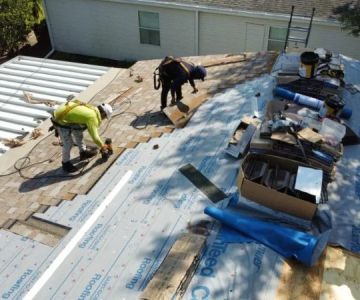
 CRS Commercial4.0 (31 reviews)
 Paradise Roofing4.0 (40 reviews)
 Trinity Restoration and Roofing4.0 (1018 reviews)
 Bold City Exteriors Incorporated0.0 (0 reviews)
 HILL TOP ROOFING & CONSTRUCTION4.0 (16 reviews)
 Ecoview Windows & Doors4.0 (123 reviews)
 The Latest Roofing Material Innovations in Polymer & Composite Technologies
 Role of Roof Sheathing Moisture Barrier
 What Every Homeowner Should Know About Roof Installation Standards
 How to Keep Your Roof in Good Condition All Year Round
 Roofing vs Roofing Replacement: Overlay Pros & Cons
 Siding Fixtures and House Numbers: Plan Removal and Reinstall