
Siding After Hail: Document Damage Without Marking It
On this page
Quick answer
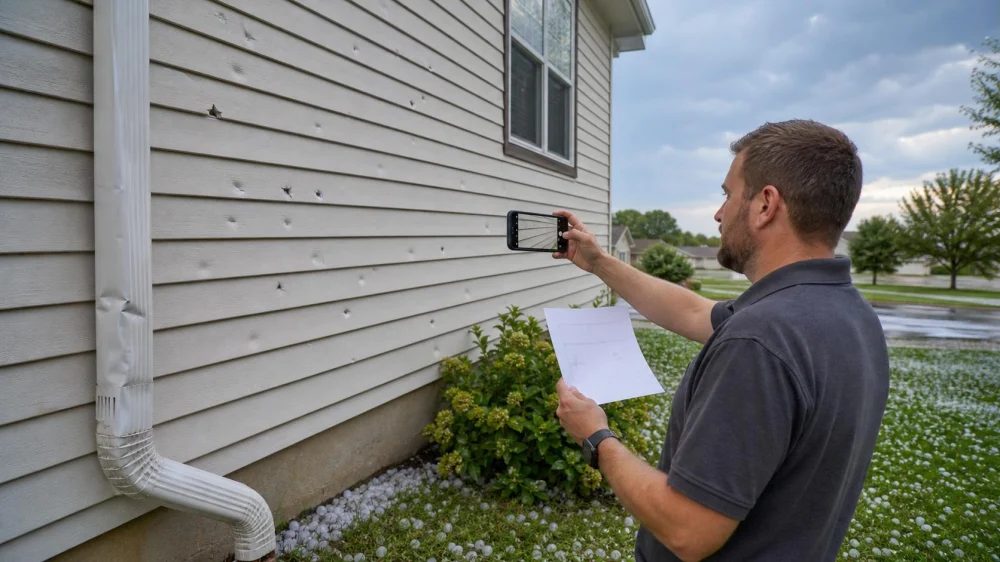
After hail, wait until lightning, wind, flooding, falling branches, and downed-line hazards have passed. Photograph every side of the home from the ground, then capture cracks, chips, dents, holes, loose panels, and damage to trim, screens, lights, gutters, and downspouts. Do not climb, pry siding, rub marks, circle damage with chalk, or accept a repair diagnosis based only on a quick door-to-door inspection.
Contact the insurer according to policy requirements and obtain a material-specific assessment from a qualified siding contractor.

KAC Construction
KillinglyNortheastern Connecticut Planning RegionConnecticut
2079 Killingly Cmns, Dayville, CT 06241, USA
Wait for safe conditions
Stay indoors while hail or lightning continues. Afterward, look for overhead lines, leaning trees, broken glass, sharp metal, loose siding, and unstable roof or wall components before walking around. Keep people and vehicles away from anything that could fall.
If the building has an opening, active water entry, electrical damage, gas odor, or structural movement, leave the affected area and call emergency or utility help as appropriate.

D & D Roofing, LLC
Fleming IslandClay CountyFlorida
4877 Raggedy Point Rd, Fleming Island, FL 32003, USA
Ground-level inspection
- Photograph each full wall elevation and the address or another property identifier.
- Move closer only on firm, debris-free ground.
- Take wide, medium, and close views of each suspected area.
- Use a ruler or neutral scale beside accessible damage without covering it.
- Record corners, trim, vents, window frames, shutters, and utility penetrations.
- Photograph collateral indicators such as dented downspouts, screens, or outdoor furniture.
- Check accessible interior walls and windows for leakage.
Use zoom for high areas. Do not lean a ladder on siding or inspect from a roof.
How materials differ
Vinyl siding may crack, chip, or break; aluminum or steel may dent or lose finish; fiber-cement can chip or crack; engineered wood and wood may show splits, coating damage, or impact marks. Age, temperature, profile, color, exposure, and impact direction affect appearance.
A surface mark is not automatically functional damage, and damage can be subtle. Ask the contractor to identify the product and explain whether findings affect weather resistance, attachment, appearance, warranty, or service life.
Build the record
- Storm date and approximate time
- Weather alerts and hail size reports if available
- Before-storm photographs
- Dated photographs and video after the storm
- Locations marked on a simple wall diagram
- Siding product, installation date, invoices, and warranty
- Emergency protection invoices and damaged-item list
- Contractor and insurer communications
Keep original image files. Editing, filters, chalk circles, or cleaning can obscure color, finish, and impact evidence.
Contractor and insurer steps
Review the policy’s reporting and emergency-mitigation terms, then contact the insurer through an official channel. Verify any contractor’s identity, license where required, insurance, references, and written scope. Do not sign broad claim-assignment or contingency documents without understanding them and local law.
Ask the contractor to distinguish damaged panels from undamaged ones, explain matching availability, inspect the water-resistive and flashing details affected by replacement, and document why repair or replacement is recommended.
Temporary protection limits
Do not tape or screw plastic over siding, fill holes with random sealant, or remove loose panels unless a qualified professional directs the work. Improvised fasteners can penetrate the wall drainage system, while tape and sealants can damage finishes or trap water.
Professionals should secure falling pieces and protect openings with a reversible, weather-appropriate method while preserving evidence.
Frequently asked questions
Should I circle hail marks with chalk?
No. Photograph and map them without altering the surface.
Do dents require siding replacement?
It depends on material, coating, performance, matching, warranty, and policy terms. Get a documented assessment.
Can damage appear days later?
Cracks, looseness, or leakage may become clearer with temperature and weather changes. Continue documenting.
Should I let a contractor file the claim?
You remain responsible for understanding the policy and agreements. Use official insurer channels and review local rules.
What if matching siding is unavailable?
Document product identification and available options, then discuss contract, policy, and local requirements with the relevant professionals.
Sources and evidence notes
This guide applies storm-scene safety, evidence preservation, material-specific exterior assessment, and consumer-contract precautions. Damage definitions, matching obligations, claim coverage, and contractor rules vary by policy and jurisdiction.
Use official weather records, the insurance policy, siding manufacturer documents, and qualified local professionals.
Conclusion and next steps
Wait for a safe scene, photograph the entire exterior before touching anything, and map specific damage from the ground. Preserve original files and product records, report according to the policy, and request a written material-specific scope. Clear evidence supports a better decision than chalk marks, pressure tactics, or an immediate promise of full replacement.



 Studio Prime Painting4.0 (130 reviews)
 Brad Stoner Painting4.0 (201 reviews)
 DC3 Construction5.0 (3 reviews)
 Brisbin Roofing Solutions4.0 (7 reviews)
 Gaines General Contracting5.0 (1 reviews)
 New Heights Roofing5.0 (4 reviews)
 Cost vs Longevity: Premium Roofing Materials Worth the Extra Cost
 How to Clean Your Roof Safely Without Causing Damage
 What’s the Best Time of Year to Replace Your Roof?
 Siding Moisture Barriers & House Wrap: What Homeowners Should Know
 The Latest Roofing Material Innovations in Polymer & Composite Technologies
 The Complete Guide to Metal Roofing Systems: Benefits, Types, and Installation