
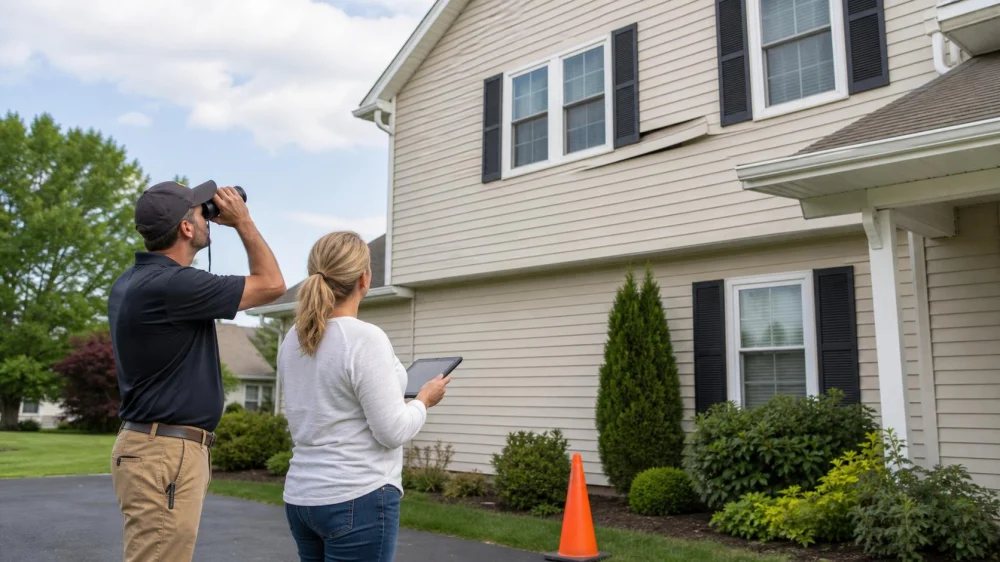
Loose Siding After Wind: Check It Without Climbing
On this page
Quick answer
After strong wind, keep clear of loose siding and inspect with binoculars from stable ground. Photograph lifted panels, missing pieces, exposed wall layers, and nearby roof or electrical damage. Do not climb a ladder, push panels back, or nail through the face. A qualified exterior contractor should secure hazards, check concealed weather barriers, and match repairs to the siding system.

All Top Roofing & Restoration Services
CartersvilleBartow CountyGeorgia
251 River Dr, Cartersville, GA 30120, USA
Start with safety
Wait until official severe-weather warnings have ended. Look for downed power lines, hanging branches, broken glass, displaced roofing, and unstable debris before approaching. Treat every line as energized and call the utility or emergency services.
Wind can leave panels attached at one edge. They may fall or become airborne without warning. Block access below the area and move vehicles only when the path is safe.
Isa Construction
DanburyWestern Connecticut Planning RegionConnecticut
55 Myrtle Ave, Danbury, CT 06810, USA
Ground-level inspection
- Walk the perimeter on stable ground.
- Use binoculars or camera zoom for upper walls.
- Photograph wide views and closer details.
- Look for lifted courses, open seams, cracks, holes, and missing trim.
- Note exposed housewrap, sheathing, insulation, or fasteners.
- Check corners, soffits, fascia, vents, windows, and utility penetrations.
- Record wind direction and storm time if known.
Do not pull on a panel to test it. A loose piece can release suddenly or damage adjacent courses.
Check indoors
Look for new drafts, water stains, damp trim, peeling paint, or debris at windows and exterior walls. Check accessible attic or basement areas only from stable flooring. Avoid wet electrical equipment and do not open wall cavities yourself.
Interior dryness immediately after a storm does not prove the weather barrier is intact. Wind-driven rain can appear later or only from a particular direction.
How siding types differ
Vinyl siding typically hangs from fasteners and needs room to move with temperature. Metal panels, fibre cement, engineered wood, and traditional wood use different joints and clearances. Stone or brick veneer has different anchorage and drainage requirements.
A repair method that works for one system can damage another. Face-nailing vinyl, caulking drainage gaps, or forcing a brittle fibre-cement panel can create new failures.
Temporary protection limits
Temporary weather protection may be needed when sheathing or wall membrane is exposed. Installation at height, near electricity, or in continuing wind belongs to trained professionals. Improper tarps and fasteners can trap water, tear the wall barrier, or detach in another gust.
Move indoor belongings away from the affected wall and use containers for drips where safe. Do not seal a wet assembly permanently before it is inspected and dried.
What a contractor should inspect
- Panel locks, fasteners, clips, and attachment substrate.
- Starter strips, corners, trim, and termination details.
- Housewrap, flashing, drainage plane, and sheathing.
- Windows, doors, vents, meters, and other penetrations.
- Matching product availability, colour lot, and profile.
- Adjacent roof, soffit, fascia, and gutter damage.
Ask for a written scope separating temporary stabilization from permanent repair. Hidden damage should use a documented change-order process.
Document the damage
Keep dated photos, contractor reports, weather records, receipts, product labels, and samples when safe and permitted. Do not discard fallen siding before asking the insurer or contractor whether it is needed for identification.
Review the insurance policy and report a material claim promptly. Avoid signing broad assignments or emergency contracts you do not understand.
Urgent warning signs
Call emergency services for a collapsed wall, active fire, gas odor, downed electrical line, serious injury, or water contacting energized systems. Leave the area when exterior material is falling or structural movement is visible.
Important limitations
This article is general homeowner information, not structural, insurance, electrical, or installation advice. Siding systems, codes, wind ratings, permits, and warranties vary by location and manufacturer. An on-site qualified professional must determine safe repair.
Sources and evidence notes
- Federal Emergency Management Agency: post-storm safety and wind-damage resources.
- Vinyl Siding Institute and product manufacturers: system-specific installation and movement requirements.
- Occupational Safety and Health Administration: ladder, fall, and electrical hazard guidance.
- Insurance and local building authorities: claim documentation, permits, and repair requirements.
Frequently asked questions
Can I snap loose vinyl siding back into place?
Do not work at height or force storm-damaged panels. Locks, fasteners, and substrate may be damaged and need inspection.
Does one missing panel require full replacement?
Not always. Product availability, fading, adjacent damage, and weather-barrier condition determine the scope.
Should I caulk the open seam?
Not without system-specific guidance. Some seams and drainage paths must remain open, and caulk can trap water.
Can wind damage be hidden?
Yes. Fasteners, sheathing, and weather barriers may be damaged even when a panel remains nearby. Professional inspection matters.
Conclusion
Loose siding after wind is both a falling-debris and weather-protection concern. Observe from stable ground, keep people away, document the full exterior and interior pattern, and use qualified help. Permanent repair should address the attachment and concealed drainage layers, not simply make the panel look flat again.
 Westmoreland Commercial Roofing4.0 (30 reviews)
 Doherty Exteriors Inc.4.0 (8 reviews)
 Bannister Custom Exteriors3.0 (25 reviews)
 Bales Home Solutions4.0 (13 reviews)
 Eternal Roofing and General Contracting5.0 (20 reviews)
 Roofing and Siding of Cape Cod, LLC4.0 (144 reviews)
 How to Budget for a Roof Replacement Project: Step-by-Step Guide for Homeowners
 How to Deal with Roof Moss & Lichen without Damage
 Choosing Roof Materials for Low Slope Roofing: Best Options Explained
 Best Roofing Materials for Cold Climates – Durable Options for Winter
 How to Extend Roof Life with Preventive Maintenance Plans
 How to Maintain Siding in Wet or Flood-Prone Areas