
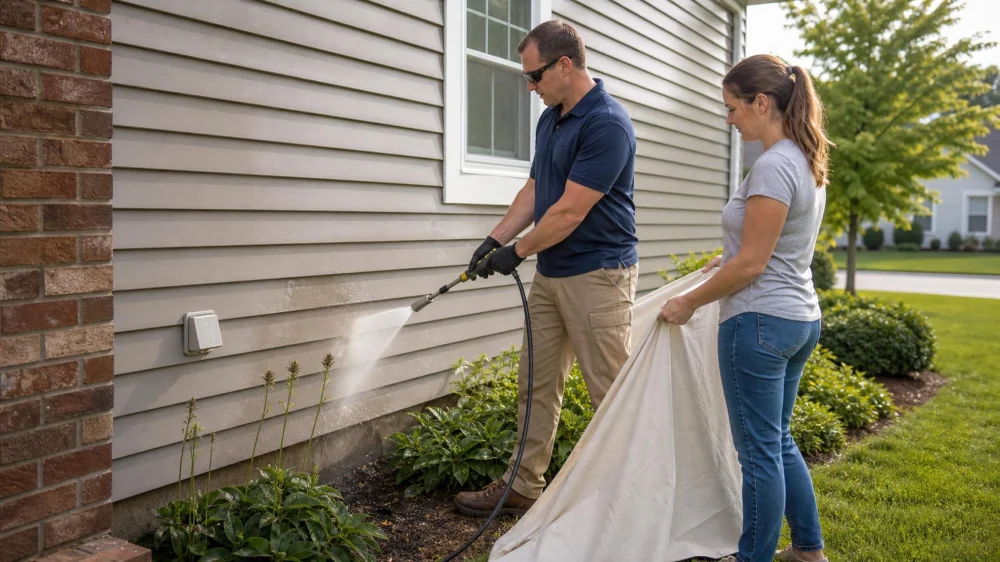
Pressure Washing Siding: Check the Surface Before You Spray
Pressure washing can remove loose soil from some siding, but too much pressure or the wrong angle can drive water behind panels, scar finishes, force debris into vents, and damage seals around windows. The safest plan starts with the siding manufacturer’s instructions and a low-risk cleaning test—not with the strongest machine setting.
Identify the Siding
Determine whether the home has vinyl, fibre cement, engineered wood, natural wood, metal, stucco, masonry, or mixed cladding. Confirm the product and finish from purchase records, spare pieces, or contractor documentation. Similar-looking surfaces can have different cleaning limits. Do not assume that a method demonstrated on one wall system is approved for another.

Metro Atlanta Roofing & Remodeling
25 Powder Springs St Suite 216, Marietta, GA 30064, USA
Inspect Its Condition
Walk the building from the ground and photograph cracks, loose panels, open joints, peeling paint, damaged caulk, soft areas, insect activity, and staining. Check windows, doors, vents, electrical fixtures, utility penetrations, and foundation transitions. Cleaning should wait when the wall already has openings or suspected water damage that pressure could worsen.

Parlament Roofing and Construction
300 Richey Rd #4, Leesburg, FL 34748, USA
Read Cleaning Instructions
Find current manufacturer guidance for pressure, nozzle, distance, angle, detergents, and warranty restrictions. Some products recommend a garden hose and soft brush instead of a pressure washer. Follow coating or paint instructions too. If the product cannot be identified, use the least aggressive suitable method or consult an experienced siding professional before testing.
Choose Conditions
Select a mild, dry period without strong wind, freezing temperature, intense direct sun, or rain expected before the wall can dry. Sun can bake cleaner onto a surface, while wind can carry spray onto people, cars, neighbours, and landscaping. Plan enough daylight to inspect the wall afterward and keep household windows closed throughout the process.
Protect Openings and Property
Move furniture, vehicles, and delicate objects out of the spray zone. Follow product guidance for plants and runoff. Keep water away from exterior outlets, service equipment, cameras, lights, dryer vents, soffit vents, and combustion openings. Do not seal or cover an operating exhaust or air intake. Coordinate safe temporary protection with qualified trades when necessary.
Choose Cleaner Carefully
Use only a cleaner approved for the siding, coating, staining type, nearby metals, and landscaping. Never mix bleach with ammonia, acids, or other products. Read dilution, protective equipment, dwell time, temperature, and rinse instructions. Test a hidden area and let it dry fully. A clean wet patch may reveal discoloration only after drying.
Use a Controlled Method
Begin with the lowest approved pressure and a wide suitable fan, maintaining the specified distance. Direct water down the wall rather than upward under laps, shingles, vents, or soffits. Work in manageable sections and keep the nozzle moving. Never use a narrow high-pressure stream to erase one stubborn stain; identify the stain and use an appropriate treatment.
Stay Off Ladders
Pressure-washer reaction, wet rungs, hoses, and overspray make ladder work dangerous. Do not spray from a roof or lean out a window. Use ground-based approved equipment within its limits or hire a trained, insured professional with proper access and fall protection. Keep children, pets, and bystanders out of the entire work and hose area.
Rinse and Inspect
Rinse according to cleaner and siding instructions without flooding joints. After the wall dries, check for streaks, lifted edges, water behind transparent fixtures, damaged finish, wet interior areas, and new staining. Clean equipment and manage wastewater under local rules. Record the products and settings used for warranty and future maintenance reference.
Know When to Hire Help
Call a professional for high walls, unidentified siding, lead-paint concerns, asbestos-containing materials, extensive biological growth, electrical exposure, damaged cladding, or suspected leaks. Ask about insurance, method, cleaning products, runoff, protection, and responsibility for damage. A professional estimate should describe the surface and process, not promise that pressure alone removes every stain.
Prepare a simple wash map before starting. Divide each elevation at corners, windows, or downspouts, and record the test area, cleaner dilution, pressure limit, nozzle, distance, start time, and weather. This avoids treating one wall twice while another is missed. It also gives a contractor useful information if streaking or damage appears later. Never mark the siding with permanent ink or tape that can stain the finish.
Check inside the home after each test section, especially around the corresponding windows, outlets, and wall penetrations. Stop if you find damp trim, water at a sill, unusual electrical behaviour, or moisture in a basement or crawlspace. Give the assembly time to reveal a problem before expanding the work. Faster cleaning is not useful when it hides water behind a finished wall.
Safe siding cleaning is controlled and material-specific. Identify the wall, repair openings first, follow manufacturer limits, protect vents and utilities, test the cleaner, and keep both feet on the ground. When low-pressure cleaning does not solve the issue, diagnose the stain rather than increasing force.

 Platinum Roofing LLC5.0 (4 reviews)
 A Sunrise Roofing Inc0.0 (0 reviews)
 Kaz Home Improvements4.0 (162 reviews)
 Sanchez Metal Roofing & REMODELING LLC4.0 (32 reviews)
 Dynamite Roofing & Construction5.0 (40 reviews)
 American Platinum Remodeling LLC5.0 (190 reviews)
 Roof Slope & Drainage: How It Prevents Water Pooling Issues
 How to Spot Roof Wear and Tear Early: Essential Tips for Homeowners
 How to Maintain Roof Strength in All Seasons: Expert Guide USA
 What to Know About Roof Replacement Timelines
 What to Expect During Roof Replacement for Large Homes
 Everything You Need to Know About Roof Warranties