
How Roof Drainage Protects Siding From Damage
On this page
Quick answer
Roof drainage protects siding by moving rainwater from shingles into gutters, through downspouts, and away from walls and the foundation. When gutters clog, downspouts discharge too close to the house, or roof edges spill water unevenly, siding can stain, swell, rot, or allow moisture behind trim. Watch the home during or after rain to spot problems early.

Why roof drainage matters for siding
Roof drainage is the system that collects and redirects water after it leaves the roof surface. It includes gutters, downspouts, extensions, splash blocks, roof edges, valleys, and the ground slope around the home.
Siding is designed to shed normal weather, but it should not be treated like a drain. Repeated sheets of water, splashback from hard surfaces, or overflow from one gutter corner can soak seams and trim far more often than the siding manufacturer intended.

Lansing Building Products - Dartmouth, MA
DartmouthBristol CountyMassachusetts
965 Reed Rd North, Dartmouth, MA 02747, USA
What to check after rain
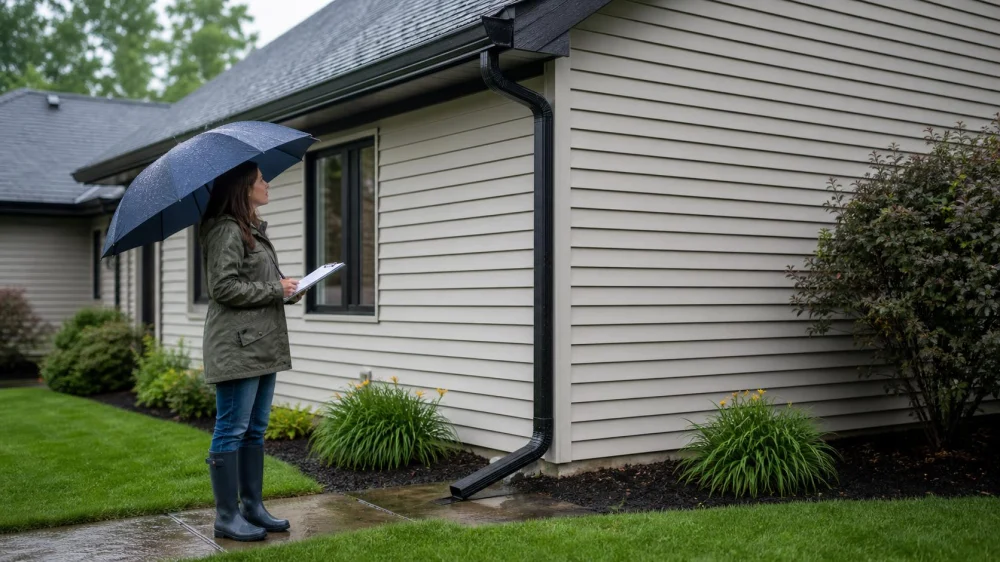
A short walkaround after a steady rain can reveal more than a dry-weather inspection. Stay on the ground and observe how water actually moves.
- Gutter overflow: Water pouring over the front edge may point to leaves, blocked outlets, sagging, or too much roof water for that section.
- Downspout discharge: Water should move away from the siding and foundation, not pool beside the wall.
- Splash marks: Mud, mulch, or stains on lower siding often mean water is hitting the ground too hard and bouncing back.
- Wet trim: Window trim, door trim, corner boards, and fascia that stay wet longer than surrounding surfaces should be watched.
- Foundation grading: Soil or pavement that slopes toward the home can keep siding and lower wall areas damp.
- Ice-prone areas: In colder regions, blocked drainage can contribute to icicles and freeze-thaw stress near roof edges.
Common drainage problems
Many siding issues begin with a simple drainage defect. A clogged gutter outlet can send water down the face of the siding. A short downspout can saturate the same lower wall after every storm. A missing splash block can turn landscaping into a muddy rebound zone. A low or sagging gutter can overflow even when it is not full of debris.
Another problem is concentrated runoff. If a large roof plane drains into a small corner, the gutter may need adjustment, cleaning, or evaluation by a contractor familiar with roof and gutter capacity.
Best for and not ideal for
This guide is best for homeowners who want to understand whether water movement is contributing to siding stains, lower-wall dampness, or trim wear.
It is not ideal for diagnosing hidden wall damage, redesigning a drainage system, replacing flashing, or confirming whether gutters are sized correctly. Those decisions should involve a qualified roofing, siding, gutter, or drainage professional.
Practical maintenance steps
- Keep gutters clear. Leaves and roof grit can block outlets and cause water to spill onto siding.
- Extend downspouts. Use extensions or splash blocks where water exits too close to the wall.
- Trim vegetation. Shrubs touching siding can hold moisture and hide staining or damage.
- Refresh splash control. Add stone, splash blocks, or corrected grading where water rebounds onto lower siding.
- Photograph repeat spots. If the same area stains after every rain, it is worth tracking and showing to a contractor.
- Avoid quick cosmetic coverups. Painting over stains without fixing water movement can allow the problem to return.
When to call a professional
Call a professional if water enters the home, siding is soft or swollen, trim is rotting, gutters pull away from the fascia, downspouts cannot keep up, or stains keep returning after cleaning. Also get help for high rooflines, steep slopes, multi-story gutters, or anything that would require unsafe ladder work.
Important notes
- This article provides general exterior maintenance guidance for homes in the United States.
- Do not inspect gutters from a ladder during rain or storms.
- Drainage fixes may involve roofing, gutter, siding, grading, or foundation considerations.
- Local building practices, climate, roof shape, and siding material affect the right repair.
FAQ
Can bad gutters damage siding?
Yes. Gutters that overflow or leak repeatedly can wet siding, trim, and wall seams more often than normal rainfall, increasing the chance of staining, swelling, rot, and hidden moisture issues.
How far should downspouts send water from the house?
The correct distance depends on grading and site conditions, but the basic goal is clear: water should flow away from the foundation and should not soak siding or trim. A contractor can assess difficult drainage areas.
Are siding stains from roof drainage urgent?
Not always, but recurring stains deserve attention. If the stain grows, appears after every rain, or is paired with soft trim or interior marks, schedule a professional inspection.
Should I clean siding before fixing drainage?
Fix the water source first when possible. Cleaning can improve appearance, but stains often return if gutters, downspouts, splashback, or grading continue to wet the same area.
Evidence notes
This article is based on common exterior maintenance principles: roof runoff should be collected, redirected, and discharged away from vulnerable wall assemblies. Product instructions, local codes, and contractor findings should guide repairs.
Next steps
Choose the next rainy day to watch where water leaves the roof, where it exits each downspout, and whether it touches siding. If one area repeatedly stays wet or stained, take photos and ask a qualified professional to evaluate the drainage path before damage spreads.






 No Limit Carpentry, Inc.0.0 (0 reviews)
 South County Roofing0.0 (0 reviews)
 North American Roofing Company5.0 (1 reviews)
 iSmart Roofing5.0 (27 reviews)
 Premier siding and roofing4.0 (8 reviews)
 CT STRONG ROOFING LLC5.0 (5 reviews)
 What to Expect During Roof Replacement for Large Homes
 How to Spot Hail Damage on Your Roof | Roofing Tips for Homeowners
 How to Choose Roofing Materials for Different Climates
 How to Choose the Right Shingle Color to Improve Curb Appeal
 How Often Should You Replace Your Home's Siding? | Total Roofing Hub
 How to Spot Hail Damage on Your Roof