
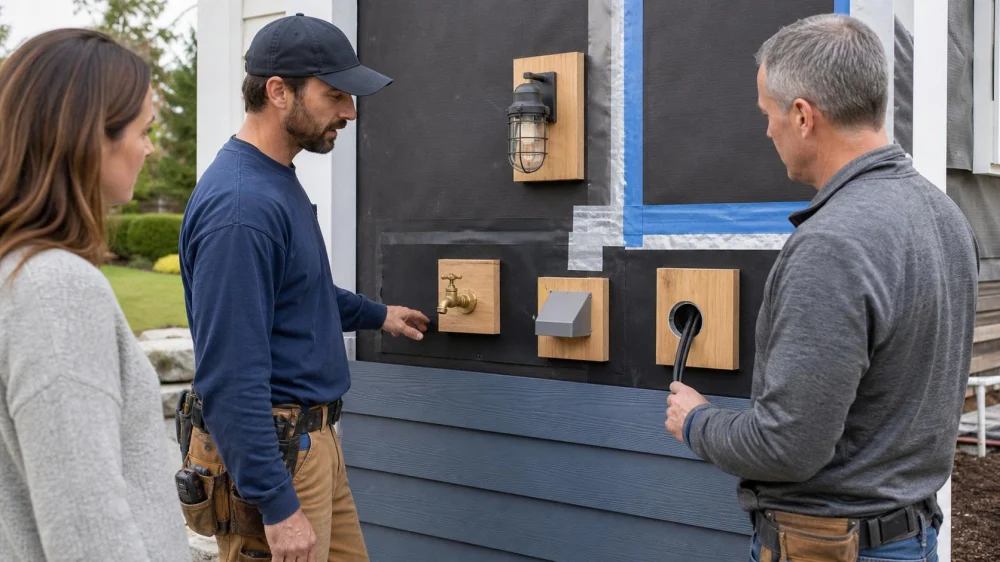
Siding Wall Penetrations: Coordinate Blocks, Flashing, and Sealants
Hose bibs, vents, cables, outlets, lights, pipes, cameras, and heat-pump lines all interrupt a sided wall. During replacement, each penetration needs a planned support, drainage path, flashing detail, and trade boundary. Simply cutting a tight hole and filling it with caulk can trap water, restrict equipment, or make future service difficult.
Create an Inventory
Photograph every penetration on each elevation and label its general purpose from safe ground positions. Include abandoned wires, capped pipes, exterior taps, exhaust hoods, meters, alarms, lights, signs, railings, and future equipment locations. Note existing cracks, rust, loose blocks, staining, and insect gaps. Give the inventory to bidders so important details do not become surprise extras.

Roof Repair CA
Los AngelesLos Angeles CountyCalifornia
16800 Devonshire St # 309, Granada Hills, CA 91344, USA
Confirm What Is Active
Do not let a siding crew cut or bury a line because it appears unused. Have the appropriate utility or licensed trade identify gas, electric, communication, plumbing, refrigeration, and ventilation components. Decide which abandoned items will be removed properly and how openings will be repaired. Preserve required utility access, labels, shutoffs, and meter clearances.
Bravo Roofing
PikesvilleBaltimore CountyMaryland
1829 Reisterstown Rd Suite 350, Pikesville, MD 21208, USA
Assign Qualified Trades
Write who disconnects and reinstalls each fixture. A siding installer may handle cladding details but not be licensed to alter wiring, gas, refrigeration, plumbing, or exhaust ducts. Sequence those specialists around removal and weatherproofing so the wall is not left open. Put scheduling, permits, inspections, testing, and added costs into the contract or approved change order.
Choose Mounting Blocks
Fixtures often need purpose-built blocks or supports that lie flat without crushing or distorting siding. Match material, depth, profile, colour, fasteners, and load to the cladding and device. Heavy awnings, railings, or equipment may require structural backing independent of the siding. A mounting block is not automatically waterproof; it must integrate with the drainage system.
Plan Drainage and Flashing
The water-resistive barrier and flashing should direct water out over lower layers rather than into the wall. Ask for manufacturer and code details at the top, sides, and bottom of blocks and penetrations. Do not seal intended drainage paths or weep openings. Photograph flashing before siding covers it, because the most important work may become invisible.
Specify Sealants
Sealant must be compatible with siding, flashing, coatings, metals, and the fixture. Define joint width, backing, surface preparation, colour, and locations. Caulk is not a substitute for missing flashing and should not bridge moving parts indiscriminately. Ask who maintains sealant and whether its service life differs from the siding warranty.
Allow Movement and Clearance
Vinyl and other materials expand and contract, while vents and equipment need heat, airflow, drainage, or service clearance. Siding should not pinch lines, ducts, cables, or faucet stems. Dryer and combustion exhaust terminations must remain functional and correctly separated from openings. Follow equipment instructions rather than copying a nearby detail that may already be wrong.
Document Hidden Work
Before concealment, photograph backing, barrier patches, flashing sequence, fasteners, and line protection with a scale and location reference. Keep product names and lot information. Request inspection sign-offs where required. Documentation helps future technicians avoid drilling into concealed lines and gives warranty reviewers evidence that the assembly followed the approved detail.
Test Each System
After reinstallation, qualified people should test lights, outlets, taps, exhaust airflow, cameras, alarms, equipment, and communication service. Look for vibration, leaks, blocked flaps, pinched lines, and fixtures that rock against the siding. Do not perform uncontrolled hose testing that drives water into the wall. Use the specified test method and record results.
Keep a Wall Record
Create one file with elevation photos, penetration inventory, trade invoices, permits, product data, warranties, hidden-stage images, and final tests. Mark any intentionally abandoned route and spare backing for future fixtures. Give relevant information to later roofers, electricians, HVAC technicians, and installers so they do not treat the cladding as an empty surface.
Use a pre-installation meeting to resolve the awkward details. Stand at each elevation with the siding supervisor and the relevant trade, identify the exact finished position, and confirm what happens if framing or utilities differ behind the old cladding. Decide who can approve movement and how price changes are documented. A photo with a temporary numbered marker is clearer than a verbal instruction such as “put it back near the corner.”
At final walkthrough, compare every penetration with the original inventory. Confirm that access doors open, exhaust flaps move, faucets operate, fixtures sit securely, and sealant joints are continuous only where specified. Look for siding pinched around pipes or wires and for drainage paths accidentally closed. Report a mismatch before scaffolding and specialty trades leave, when correction is usually simpler.
Wall penetrations succeed when structure, drainage, movement, and equipment needs are coordinated before siding goes on. Inventory every opening, assign licensed trades, specify blocks and flashing, preserve clearances, photograph hidden details, and test each system. A tube of caulk cannot replace that planning.





 Platinum Roofing LLC5.0 (4 reviews)
 A Sunrise Roofing Inc0.0 (0 reviews)
 Kaz Home Improvements4.0 (162 reviews)
 Sanchez Metal Roofing & REMODELING LLC4.0 (32 reviews)
 Dynamite Roofing & Construction5.0 (40 reviews)
 American Platinum Remodeling LLC5.0 (190 reviews)
 Roof Slope & Drainage: How It Prevents Water Pooling Issues
 How to Spot Roof Wear and Tear Early: Essential Tips for Homeowners
 How to Maintain Roof Strength in All Seasons: Expert Guide USA
 What to Know About Roof Replacement Timelines
 What to Expect During Roof Replacement for Large Homes
 Everything You Need to Know About Roof Warranties