
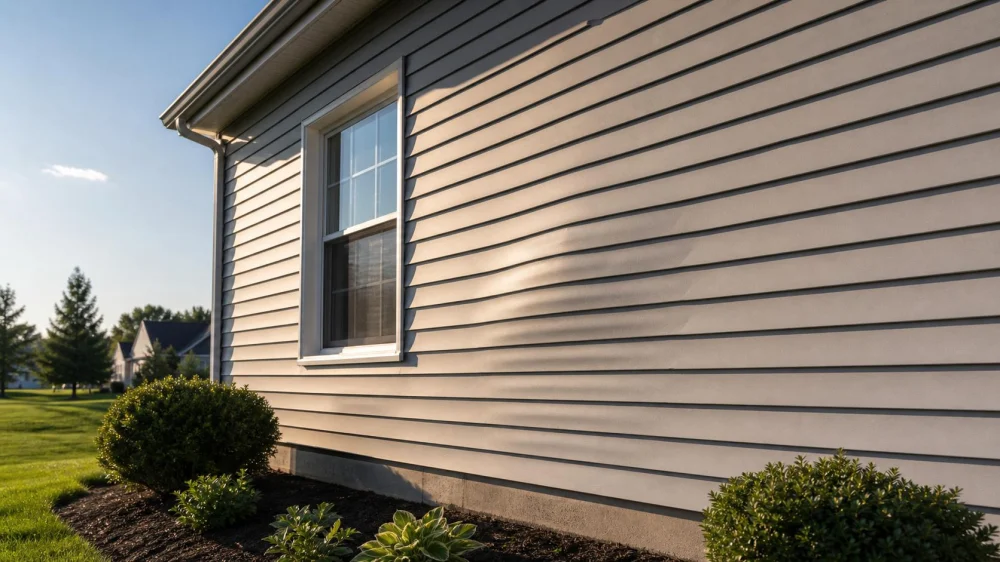
Why Siding Buckles: Safe Checks and Repair Decisions
On this page
Quick answer
Siding that looks wavy, bowed or buckled may be reacting to restricted thermal movement, fastening errors, heat reflected from nearby glass, moisture-swollen sheathing, impact or wall movement. Photograph it in different temperatures and lighting, check for leaks and interior changes, and avoid pushing panels flat or adding fasteners. A siding contractor should identify whether the problem is limited to the cladding or originates behind it.
Elite Roofing And Solar Solutions
RiversideRiverside CountyCalifornia
11004 Hole Ave, Riverside, CA 92505, USA
What siding buckling means
Siding buckling is an outward wave, bow, distortion or loss of alignment in exterior cladding. The term describes appearance, not cause. Vinyl panels are designed to expand and contract; fiber cement, engineered wood, metal and other systems have different fastening, joint and moisture requirements.
Some apparent waviness comes from low-angle sunlight or an uneven wall plane. Concern rises when the pattern is new, growing, associated with loose panels, water staining, soft substrate, cracked finishes or movement around windows and doors.
Crooks & Sons, Inc.
AndersonAnderson CountySouth Carolina
1435 Pearman Dairy Rd, Anderson, SC 29625, USA
Document the pattern
- Take wide photos from stable ground in morning and afternoon light.
- Note whether distortion changes between cool and hot conditions.
- Map isolated panels versus a full wall or repeated fastening lines.
- Look for concentration near windows, roof intersections, decks, vents and utility penetrations.
- Record recent storms, exterior work, window replacement or new reflective surfaces.
- Check inside for stains, damp odour, drywall cracks or sticking openings.
Do not climb, remove panels or press on high areas. Altering the cladding can hide evidence and damage the water-resistive layers.
Common causes and clues
- Restricted movement: vinyl nailed too tightly or without required end clearance can ripple with temperature change.
- Fastening or layout: incorrect fastener position, spacing, penetration or uneven starter details can distort panels.
- Reflected heat: concentrated sunlight from certain windows can soften or deform nearby vinyl siding.
- Moisture: leaks or poor drainage can swell sheathing or wood-based cladding and affect the wall plane.
- Wall irregularity: framing, sheathing joints or settlement may show through the finished surface.
- Impact or wind: displaced locks, cracks or bent panels can produce local waves.
- Coating or clearance issue: some materials react to wet edges, missing gaps or incompatible finishes.
A single symptom can have multiple causes. Replacement panels may buckle again if the substrate, heat source or drainage detail remains unchanged.
Safe homeowner checklist
- Inspect only from the ground or a normal accessible interior window.
- Use binoculars or zoom to check seams, locks, cracks and fastener impressions.
- Observe gutters, downspouts and roof-to-wall runoff during rain from shelter.
- Keep irrigation directed away from walls where possible.
- Check that visible vents are not covered; do not remove screens or covers.
- Restrict the area if panels are loose enough to fall.
- Arrange prompt assessment for electrical fixtures exposed to water or severe wall movement.
Best for monitoring: mild stable cosmetic waviness with no moisture or loose material, after professional confirmation. Not ideal for waiting: rapid change, falling panels, soft walls, active leakage, mould-like growth or structural symptoms.
Repair or replacement decisions
A contractor may rehang or replace a limited panel, correct fastening and clearances, repair flashing, replace damaged sheathing or rebuild a broader wall section. The appropriate scope depends on material, colour availability, age, concealed condition and whether disturbance would compromise adjacent work.
Ask that exploratory removal be limited and documented. The water-resistive barrier, flashing tapes, drainage space and penetrations should be restored to the applicable system details before cladding is reinstalled.
Questions for a siding contractor
- Is distortion in the siding, substrate or wall framing?
- Does the pattern change with temperature, moisture or reflected sunlight?
- Are fastening slots, joint gaps and clearances consistent with manufacturer instructions?
- Is there evidence of water entry at windows, roof lines or penetrations?
- What must be removed to inspect concealed layers?
- Can a targeted repair match and move correctly?
- How will hidden damage and completed flashing be photographed?
Verify locally applicable contractor credentials, insurance, product qualifications and written warranty terms. Directory listings can help identify candidates but should be independently confirmed.
Important notes and evidence boundaries
This article reflects general U.S. exterior-cladding practice. Material manufacturers, building codes, wind zones and wall designs vary. It is not a structural or moisture diagnosis.
Do not drill relief holes, face-nail moving panels or use heat to reshape siding without a documented compatible method. These actions can create leaks, restrict movement and affect product coverage.
Frequently asked questions
Does wavy vinyl siding always mean bad installation?
No. Installation is one possibility, but wall irregularity, heat reflection, impact and movement behind the panels can look similar.
Can buckled siding flatten when weather cools?
Some movement may lessen, but recurring waves indicate restricted movement or another condition worth documenting. Permanently heat-deformed panels may not recover.
Can one siding panel be replaced?
Sometimes. Feasibility depends on access, panel profile, colour fade, surrounding condition and whether the underlying cause is localized.
Is buckled siding a water leak?
Not necessarily. However, swollen sheathing and failed flashing can distort cladding, so moisture should be assessed when other signs exist.
Can reflected window sunlight damage siding?
Concentrated reflected heat can deform some vinyl products. The reflection path, temperatures and product guidance should be evaluated before choosing mitigation.
Next steps
Photograph the wall in different light and temperatures, note water and interior symptoms, and identify the siding material if possible. Request an inspection that separates panel, fastening, substrate, moisture and structural findings. Correct the cause before replacing visible panels.
 Bruno Roofing and Siding4.0 (91 reviews)
 Money Wise Roofers5.0 (4 reviews)
 Rocket Roofing4.0 (132 reviews)
 Nelson Onderdonk Roofing LLC4.0 (23 reviews)
 Hometown Contractors, Inc.4.0 (1407 reviews)
 Coombs Mobile Home Parts Supply4.0 (50 reviews)
 Everything You Need to Know About Roof Warranties
 What to Expect During Roof Replacement for Large Homes
 How Much Does a New Roof Cost in 2025? – Comprehensive Guide
 How to Extend Roof Life with Preventive Maintenance Plans
 Should I Repair or Replace My Roof? A Complete Decision Guide
 Best Roofing Materials for Cold Climates – Durable Options for Winter