
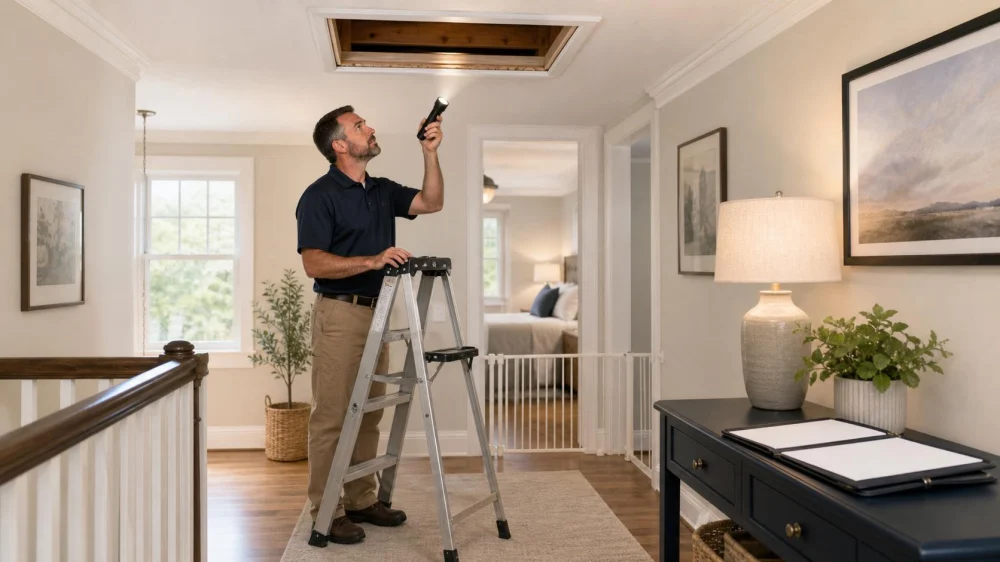
How to Prepare Attic Access Before a Roof Inspection
On this page
Quick answer
Ask whether the roof inspection includes the attic, then tell the inspector where the hatch, stairs, switches, and restricted areas are. Clear a stable path to the opening, move fragile belongings below it, secure children and pets, and disclose known electrical, insulation, pest, moisture, or structural hazards. Do not enter an unfamiliar attic, step between framing members, compress insulation, or install a temporary ladder without the inspector's agreement.
Good access helps the inspector look for roof-deck staining, ventilation conditions, daylight at openings, insulation disturbance, and other clues that may not be visible outside.

classic construction company
MonticelloSullivan CountyNew York
193 E Broadway, Monticello, NY 12701, USA
Why attic access matters
An exterior roof surface shows only part of the system. When safe and within the agreed scope, an attic view may reveal moisture patterns, fastener penetration, damaged decking, blocked ventilation paths, condensation clues, and previous repairs.
Attic observations do not automatically identify the source or prove an active leak. Plumbing, heating and cooling equipment, indoor humidity, flashing, vents, and exterior walls can produce similar symptoms. Findings need context and, sometimes, specialist testing.

Confirm the inspection scope
Before the appointment, ask whether attic entry is included, whether the inspector needs the owner present, and what conditions could prevent entry. Provide the hatch dimensions and ceiling height when access is tight or high.
Explain whether the space is finished, floored, low-clearance, shared, or accessible only through a closet. In a condominium or rental, confirm authorization. Ask whether the inspector brings an appropriate ladder or expects an installed access system.
Clear safe access
Remove boxes, clothing, furniture, and fragile objects from the path and the area directly below the opening. Provide adequate indoor lighting to the hatch, keep doors unlocked, and protect floors according to the inspector's instructions.
Do not place a chair or improvised support under the hatch. Do not remove insulation, disturb suspected asbestos-containing material, touch wiring, cover junction boxes, or create a walking surface. Tell the inspector about exposed nails, weak ceilings, animal activity, stored chemicals, extreme heat, or strong odors.
Share useful roof history
Prepare dates and locations for stains, drips, ice buildup, storm damage, roof work, ventilation changes, bathroom fan installation, and insulation upgrades. Photograph stains when they appear and note weather conditions, but do not climb onto the roof for documentation.
Give the inspector roof invoices, warranty documents, prior reports, and any interior moisture readings. Point out rooms below the concern so exterior, attic, and indoor observations can be compared.
Review attic-related findings
Ask which attic areas were viewed, which were inaccessible, and whether observations suggest active moisture, past staining, condensation, ventilation concerns, or damaged materials. Request photographs that identify location and orientation.
Clarify whether a roofer, electrician, structural professional, insulation contractor, pest specialist, plumber, or indoor-environment professional should evaluate a finding. A roof repair proposal should distinguish confirmed defects from items that need more investigation.
Attic access checklist
- Confirm attic entry is within the inspection scope.
- Describe hatch size, height, and access route.
- Obtain owner or building authorization.
- Clear the path and space below the opening.
- Secure pets, children, and valuables.
- Disclose electrical, material, pest, and structural hazards.
- Gather leak history and prior roof documents.
- Ask how inaccessible areas will be reported.
Limitations and safety notes
- Do not enter an attic that has unsafe access, extreme heat, damaged framing, exposed wiring, suspect hazardous material, or animal hazards.
- Never walk on ceiling drywall or hidden areas between framing members.
- Water near electrical components requires qualified help.
- An attic inspection is not a guarantee that every hidden leak or defect will be found.
- Urgent sagging, active electrical arcing, smoke, or structural movement requires emergency guidance.
Frequently asked questions
Must the inspector enter the attic?
Not always. Access, safety, scope, clearance, ownership, and building conditions determine whether entry is appropriate.
Should I move attic storage myself?
Only move items you can reach safely from a proper walking surface. Ask for professional help when storage requires attic entry.
Can daylight prove the roof leaks?
No. Light may indicate an opening, but many leaks are not visible as daylight and some designed vents admit light.
What if there is no attic?
Tell the inspector. Vaulted ceilings and compact roof assemblies may require other inspection methods and documented limitations.
Should insulation be pulled back?
Only by someone qualified and authorized to do so safely. Disturbance can damage materials or expose hazards.
Sources and evidence notes
This guide applies common inspection principles: define scope, ensure safe access, document limitations, compare interior and exterior clues, preserve roof history, and refer hazards to qualified specialists. The property's design, local requirements, inspector standards, and observed conditions determine the actual procedure.
Send access details in advance
Photograph the attic opening from the room below and send its location, approximate height, and any known hazards to the inspector. Ask whether entry is planned and what must be cleared. Keep the space accessible without entering the attic yourself.


 Pacific Coast Roofing INC.4.0 (27 reviews)
 Restoration Builders of California5.0 (15 reviews)
 Lake City Exteriors5.0 (8 reviews)
 Abba's Awnings Siding & Roofs4.0 (2 reviews)
 Assurance home improvements4.0 (22 reviews)
 Reade Roofing0.0 (0 reviews)
 The Best Roofing Materials for Cold Climates: Durable, Insulating, and Efficient Options
 Financing Your Roof Replacement: Loans, Insurance, & Grants
 How Roof Decking Condition Affects Overall Roofing Cost
 How to Budget for a Roof Replacement Project – Roofing Costs and Tips
 How Often Should You Replace Your Home's Siding? Expert Guide for U.S. Homeowners
 Siding Styles That Require Least Maintenance Over Time | Total Roofing Hub