

Roof Granules in Gutters: What to Record Before You Call
On this page
Quick answer
Some loose granules can wash from asphalt shingles, especially around installation or after weather. A pile that appears suddenly, keeps increasing, or accompanies bare-looking shingle areas, leaks, impact damage, or displaced roofing deserves a professional inspection. Photograph the amount and location from the ground, note recent weather and roof age, and avoid climbing onto the roof to diagnose it.
This guide is for United States homeowners with asphalt-shingle roofs who notice gritty, sand-like material at a downspout, in a ground-accessible gutter section, or on a splash block. It does not apply to safe roof access, warranty interpretation, or a structural condition that requires an on-site roofing professional.

Rocket Roofing
Rancho CucamongaSan Bernardino CountyCalifornia
9480 Utica Ave #608, Rancho Cucamonga, CA 91730, USA
What roof granules do
Roofing granules are the small mineral particles embedded in the exposed surface of many asphalt shingles. They contribute color and help protect the asphalt layer from sunlight and everyday surface wear. The manufacturer applies more particles than remain permanently embedded, so some loose material can be present when shingles are handled and installed.
Granule loss means particles have separated from the shingle surface. It is not a diagnosis on its own. The amount, timing, location, roof condition, shingle type, age, slope, drainage pattern, foot traffic, installation details, and recent weather all affect what a roofer may conclude.
Granules often concentrate at downspouts because a large roof area drains to one outlet. A small-looking roof change can therefore produce a noticeable pile in one place, while an old pile can remain after the event that caused it. Ground observations are useful for documenting a pattern, not for deciding that the roof has failed.
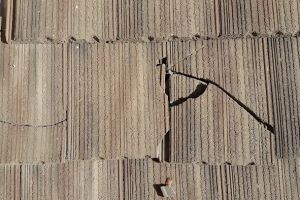
Why granules collect near gutters
- Normal loose material after installation. Handling, cutting, packaging, and installation can leave unembedded particles that later wash into drainage.
- Gradual weathering. Sun, temperature changes, rain, and time affect shingle surfaces. The pattern matters more than a single grain count.
- Hail or debris impact. Impact may dislodge particles, but granules at a downspout cannot prove hail damage. Other roof and property evidence must be evaluated.
- Foot traffic or mechanical contact. Walking, tools, branches, and service work can abrade localized areas.
- Water concentration. Valleys, upper-roof drainage, and gutter flow may carry more material to particular outlets.
- Product or installation concerns. Uneven adhesion, storage damage, manufacturing variation, or installation practices may be relevant, but warranty decisions require documentation and product-specific review.
- Material that is not from shingles. Grit can also come from soil, masonry, sealants, debris, or previous roofing work. Color and texture alone may not identify it.
A newly noticed pile after a storm is a reason to document the roof and drainage system, not proof that insurance-covered damage occurred. Similarly, the absence of a pile does not prove the shingles are undamaged.
A safe ground-level checklist
- Stay on stable ground. Do not climb a ladder, walk the roof, lean from a window, or reach into a high gutter. Use binoculars or phone zoom from a safe location.
- Photograph the context. Take a wide photo showing the downspout and a close photo of the material with a common object nearby for scale. Do not include private paperwork or addresses in images shared publicly.
- Record the date and weather. Note hail reports, high winds, heavy rain, tree debris, snow or ice movement, and any recent roof or gutter work.
- Note where the granules appeared. Identify the downspout, roof plane it likely drains, and whether another outlet shows a similar amount. Do not disconnect drainage to investigate.
- Look up from the ground. Check for obvious missing or displaced shingles, unusually light or dark patches, exposed-looking areas, damaged gutters, hanging materials, or tree impact.
- Check inside accessible areas. From safe attic flooring or normal living space, look for new stains, daylight, damp insulation, or odors. Do not walk between attic framing or touch wet electrical components.
- Keep a sample only if useful. With gloves, a small dry sample from the ground can be placed in a labeled container. Do not scoop from a contaminated drain or handle sharp debris.
- Compare over time. After documenting the first amount, observe whether new material returns following later rainfall. Avoid repeatedly clearing gutters from a ladder just to measure loss.
If the downspout is blocked, overflowing, or discharging against the foundation, arrange safe gutter service. Drainage correction and roof-condition diagnosis are related but separate tasks.
When to monitor and when to call
Monitoring may be reasonable when the roof was recently installed, the amount is small, no new material appears after subsequent rain, the shingles look uniform from the ground, and there are no leak or storm-damage signs. Keep installation records and follow the manufacturer’s and contractor’s maintenance guidance.
Schedule a roof inspection when granules keep returning, several outlets show a new increase, the roof has bare-looking patches, shingles are cracked or displaced, flashing appears disturbed, or the condition follows hail, falling branches, or service traffic. Roof age and prior repair history help the contractor interpret the finding.
Request prompt help when water is entering the home, a tree or object is on the roof, material is hanging, the deck appears deformed, or the area below is unsafe. Keep people away from the affected zone. Do not place a tarp or attempt an emergency roof repair unless you are trained, equipped, and conditions are safe.
Call emergency services for immediate life-safety hazards such as a structural collapse, fire, fallen electrical lines, or a dangerous tree condition. A routine roof inspection is not the correct response to an active emergency.
Questions for a roofing contractor
Share your photos, weather notes, installation documents, roof age if known, and any interior leak evidence. Ask the contractor to explain:
- whether loss is widespread or localized and how that was determined;
- whether the marks are consistent with aging, impact, foot traffic, installation, or another mechanism;
- which roof planes, valleys, flashings, and drainage paths were inspected;
- whether the roof deck or attic shows moisture or damage;
- whether repair, monitoring, or replacement is recommended and why;
- how the proposed work affects manufacturer and workmanship warranties; and
- what photos and written findings will be included in the report.
When the recommendation is costly, consider an independent second opinion. A contractor should connect the proposed scope to specific observed conditions instead of treating any granule pile as automatic proof that the entire roof needs replacement.
Evidence and limitations
This article reflects common asphalt-shingle and roofing inspection practice: some loose granules occur, drainage concentrates them, and their significance depends on the roof-wide pattern and related damage. Manufacturer instructions and warranty terms for the exact product control product-specific decisions.
Photos from the ground cannot reveal every shingle condition, flashing detail, roof-deck issue, or leak route. Weather records do not prove what happened at one property. A qualified roofer can perform a condition-appropriate inspection and document findings without asking the homeowner to take roof-access risks.
Frequently asked questions
Are granules in gutters normal on a new roof?
Some loose particles can wash off after installation. The installer or manufacturer can explain expectations for the exact shingle. A large, recurring, or uneven loss pattern still deserves review.
Do roof granules prove hail damage?
No. Hail can contribute to granule displacement, but loose particles alone do not establish impact damage, timing, or coverage. A professional should evaluate shingles and related property evidence.
Can I count the granules to measure roof life?
There is no reliable homeowner count that converts a pile into remaining service life. Downspout area, prior debris, rainfall, roof size, and drainage concentration vary. Track changes and use a full roof assessment.
Should I clean the granules out of my gutters?
Gutters need to drain correctly, but high gutter work carries fall risk. Use a qualified gutter service if safe access is not available. Document the material before it is removed.
Can granule loss be repaired with a coating?
Do not apply a generic coating or loose granules to asphalt shingles without product-specific approval. Such work may not correct the cause and can affect drainage, fire classification, or warranty terms. Ask the shingle manufacturer and a roofer.
Who should inspect after a storm?
A properly qualified, insured roofing contractor or roof inspector can document the condition. If an insurance claim may apply, follow policy notice requirements and keep independent records. Do not let urgency claims replace a written scope.
Next steps
Photograph the granules and downspout from stable ground, note recent weather and roof work, and look for related roof or interior warning signs without climbing. Monitor whether new material returns after later rain. Schedule a roof inspection for recurring loss, bare-looking areas, displaced shingles, impact evidence, or leaks, and request written findings that connect the condition to any proposed repair.



 Fingerlakes Sunroom and Solarium inc4.0 (14 reviews)
 J Roofing & Construction5.0 (1 reviews)
 BMB Construction Remodeling & Repair service5.0 (19 reviews)
 Highland Window Company, LLC4.0 (88 reviews)
 Roofing Service Pro's5.0 (15 reviews)
 The Trusted Toolbox4.0 (1202 reviews)
 How to Prevent Roof Damage from Clogged Gutters
 How to Choose a Reliable Roofing Contractor Near You: A Complete Guide
 Soffit and Fascia Damage: Signs Homeowners Can Check
 How to Safely Repair Asphalt Shingles After Winter Freeze Damage
 How to Maintain Roof Strength in All Seasons: Expert Guide USA
 What Homeowners Should Know Before Replacing an Old Roof