
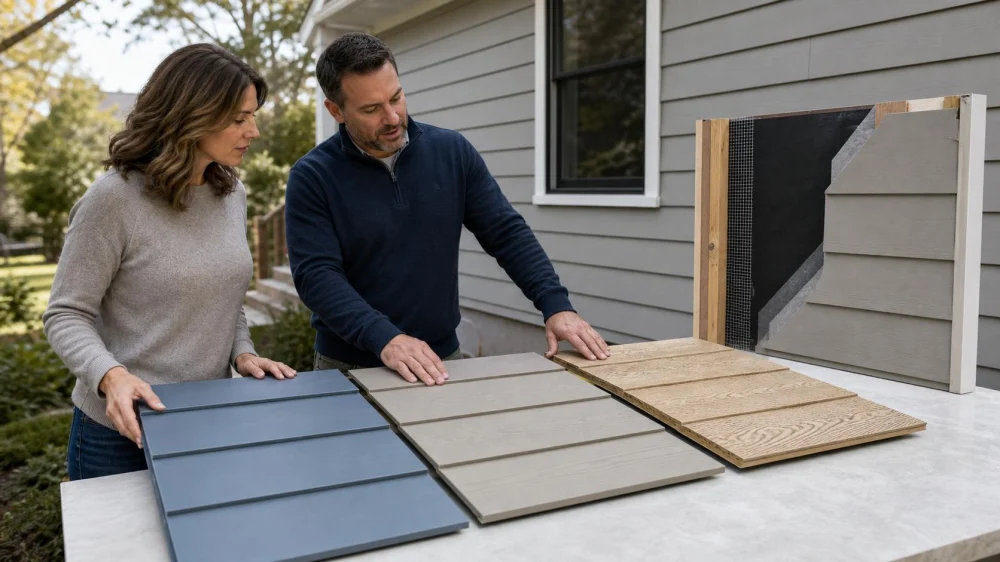
Vinyl, Fiber Cement, or Engineered Wood Siding?
On this page
Quick answer
Vinyl siding is lightweight and low-paint-maintenance; fiber cement offers a solid painted appearance and noncombustible material; engineered wood provides a wood-like profile with lighter handling. None is automatically best. Compare wind rating, fire exposure, impact, moisture detailing, repainting, repairability, installer experience, warranty terms, and total installed system—not panel price alone.
Choose a wall system, not just a panel
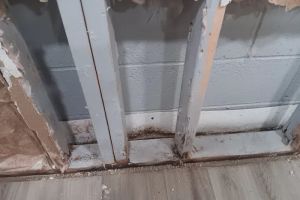
Siding is cladding: the exterior finish that sheds most rain and protects the wall from weather and impact. It is not the only water-control layer. A durable assembly also needs a continuous water-resistive barrier, correctly integrated window and door flashing, kick-out and roof-wall details, penetrations, clearances, drainage, and suitable fasteners.
Even a durable panel can fail when water is trapped behind it or cut edges and joints are detailed incorrectly. Ask how the entire wall will drain and dry.

Vista Roofing, Inc.
West ColumbiaLexington CountySouth Carolina
2237 Leaphart Rd Unit A, West Columbia, SC 29169, USA
Vinyl siding
- Best for: owners prioritizing limited repainting, relatively light weight, and replacement of individual courses.
- Consider: thermal movement, wind-rated fastening, panel thickness, impact in cold weather, colour fading, and trim details.
- Installation boundary: panels must hang and move as designed; overdriven fasteners can cause buckling.
Vinyl does not absorb water like wood-based products, but water can still pass at laps and openings. The drainage plane behind it remains essential.
Fiber cement siding
- Best for: a substantial painted finish, varied profiles, and projects where a noncombustible cladding material is valued.
- Consider: product weight, cutting dust controls, edge and joint treatment, paint cycle, brittle impact damage, and qualified installation.
- Installation boundary: clearances, flashing, fastener type, joint layout, field-cut treatment, and manufacturer instructions matter.
Fiber cement can absorb and store some moisture. A drained, properly detailed assembly and maintained coating help manage exposure.
Engineered wood siding
- Best for: a wood-like appearance with lighter panels and often easier cutting than fiber cement.
- Consider: coating maintenance, exposed edges, ground and roof clearances, impact, insects where relevant, and water management.
- Installation boundary: use approved fasteners, seal or coat cuts as required, and keep the product away from persistent wetting.
Formulas and warranties vary significantly. Confirm the exact product, not merely “composite” or “engineered” in a proposal.
Side-by-side decision rules
- Choose vinyl when repainting avoidance and economical course replacement lead, and the installer can meet local wind requirements.
- Choose fiber cement when a painted, rigid appearance and noncombustible material are priorities, with budget for weight, cutting, installation, and future coating.
- Choose engineered wood when wood-like texture and lighter handling matter, and moisture clearances and coating maintenance will be managed.
- Avoid choosing by appearance alone when the home has chronic leaks, missing flashing, damaged sheathing, wildfire exposure, coastal wind, or flood risk.
Climate and exposure checks
- Confirm local design wind pressure and product installation rating.
- Review wildfire or exterior-wall fire requirements with local officials.
- Map roof runoff, splashback, snow accumulation, sprinklers, and shaded walls.
- Check coastal salt, hail, freeze-thaw, and high-UV exposure.
- Inspect sheathing and framing before covering damage.
- Choose a drainage and ventilation approach compatible with insulation and wall design.
No U.S. material ranking fits every region. Local code, manufacturer instructions, and a building-envelope assessment control the final choice.
Estimate checklist
- Exact manufacturer, product line, profile, thickness, colour, and warranty.
- Removal, disposal, sheathing allowance, and hazardous-material testing.
- Water-resistive barrier, seams, flashing, rainscreen or drainage method.
- Window, door, roof-wall, deck, utility, and mounting-block details.
- Fastener material, spacing, substrate, and wind design.
- Clearances, cut-edge treatment, caulk locations, and paint system.
- Vent, light, hose, meter, and equipment reconnection.
- Permit, inspection, photos, cleanup, workmanship warranty, and maintenance guide.
Limitations and important notes
Material performance varies by product line and installation. Cost depends on region, access, wall complexity, removal, sheathing repair, insulation, trim, and permits. This comparison does not replace project engineering, fire-zone requirements, or local code.
Older siding, coatings, caulk, and insulation may contain lead or asbestos. Do not disturb suspect materials before appropriate assessment. Structural rot, active water entry, or unsafe electrical attachments needs qualified help.
Frequently asked questions
Which siding lasts longest?
No honest answer comes from material name alone. Exposure, wall drainage, installation, coating, impact, and maintenance determine service life. Compare written warranties and local performance.
Does new siding make a house waterproof?
No. Cladding sheds rain, while the underlying drainage plane and flashing manage water that gets behind it.
Which needs the least maintenance?
Vinyl typically avoids repainting, but still needs inspection, cleaning, and repair. Fiber cement and engineered wood commonly require coating and joint maintenance according to their instructions.
Should siding go over old siding?
Only when code, manufacturer instructions, substrate condition, flatness, flashing integration, and fastener attachment support it. Removal often reveals concealed damage and improves detailing.
Sources and evidence notes
The system-first approach follows U.S. Department of Energy Building America guidance on high-performance walls and cladding drainage. Product-specific installation and local code remain controlling.
Next steps
Shortlist materials by climate, appearance, maintenance, fire, wind, and impact needs. Then ask bidders to price the same complete wall scope—including flashing, drainage, sheathing repair, trim, and closeout documents—so the comparison reflects installed performance rather than panel cost.
 Coastal G. A. Roofing, LLC4.0 (12 reviews)
 All Access Builders LLC4.0 (128 reviews)
 Dedicated contracting services0.0 (0 reviews)
 Richards Building Supply4.0 (15 reviews)
 Katy Roofing & Remodeling4.0 (19 reviews)
 LaMaison Construction, Inc.3.0 (4 reviews)
 How to Spot Roofing Issues Before Major Repairs Are Needed
 How to Minimize Roof Noise: Material & Installation Tips
 How to Choose Roofing Materials for Long-Term Protection
 What to Expect During a Roof Inspection: A Comprehensive Guide
 Flat Roof vs Sloped Roof: Pros, Cons & Typical Costs
 Siding Styles That Compliment Your Home's Architectural Era